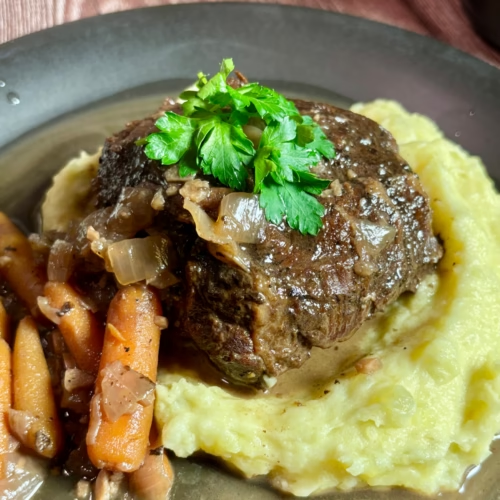
Braised Beef Cheeks

These beef cheeks are braised in red wine until they’re tender, with a rich sauce made from the wine, vegetables, and all those good browned bits from the bottom of the pot. It takes a little time, but most of it is hands-off. Serve them over mashed potatoes, polenta, or cauliflower purée and spoon that sauce over everything.
Equipment
- Dutch Oven
- Immersion blender Optional
Ingredients
- 3 tbsp olive oil divided
- 4 large beef cheeks or 6 small
- 1 large onion roughly diced (about 1 cup)
- 1 celery stalk roughly diced (about ¾ cup)
- 1 large carrot roughly diced (about ¾ cup)
- 4-6 garlic cloves minced
- 5 sprigs fresh thyme
- 2 dried bay leaves
- 2 cups dry red wine Cabernet Sauvignon, Shiraz, or Merlot
- 1 cup beef stock
- 1 tbsp brown sugar
- 2-3 tsp salt divided
- Freshly cracked black pepper to taste
Instructions
- Preheat the oven to 325°F (165°C).
- Trim away any large pieces of tough fat or membrane from the beef cheeks. Pat them dry really well, then season all over with 1 tsp salt and freshly cracked black pepper.
- Heat 2 tbsp olive oil in a large Dutch oven over medium-high to high heat.
- Sear the beef cheeks in batches, about 3–4 minutes per side, until deeply browned. Don’t rush this step and don’t overcrowd the pot. Transfer the beef cheeks to a plate.
- Reduce the heat to medium and add the remaining 1 tbsp olive oil.
- Add the onion, celery, and carrot. Cook for about 5 minutes, stirring occasionally, until they start to soften and pick up some colour.
- Add the garlic and cook for another 30–60 seconds.
- Pour in the red wine and scrape up all the browned bits from the bottom of the pot.
- Bring to a simmer and cook for 2–3 minutes.
- Return the beef cheeks to the pot. Add the beef stock, thyme, bay leaves, brown sugar, remaining salt, and a generous amount of black pepper.
- The liquid should come about halfway up the beef cheeks. If needed, add a little more stock.
- Bring the liquid to a gentle simmer, then cover with the lid and transfer to the oven.
- Bake for 3½–4 hours, or until the beef cheeks are fork-tender and nearly falling apart.
- Carefully remove the beef cheeks and place them on a plate. Remove the thyme stems and bay leaves.
- Use an immersion blender to blend the vegetables and braising liquid until smooth.
- If the sauce is thinner than you’d like, place the Dutch oven over medium heat and simmer uncovered for 5–10 minutes, or until slightly reduced.
- Taste and adjust the salt and pepper.
- Return the beef cheeks to the sauce and spoon some of the sauce over top. Keep warm until ready to serve.
- Serve over mashed potatoes, polenta, or cauliflower purée, with plenty of that red wine sauce spooned over everything. Garnish with fresh parsley or chives.
Notes
Variations
- Make it without wine: Replace the red wine with beef stock and add 1–2 tbsp balsamic vinegar. Add the vinegar with the stock rather than reducing it with the vegetables.
- Herbs: Thyme works beautifully here, but rosemary can be used instead. I’d use 2–3 small sprigs so it doesn’t overpower the sauce.
- Extra-rich sauce: For an even silkier finish, stir a small knob of cold butter into the finished sauce just before serving.
- Fridge: Store the beef cheeks in an airtight container with the sauce for up to 4 days.
- Freezer: Freeze the beef cheeks with the sauce in an airtight freezer-safe container for up to 3 months. Thaw overnight in the refrigerator before reheating.
- Reheating: Reheat gently on the stovetop over low heat, covered, until warmed through. Add a splash of beef stock or water if the sauce has thickened too much.
You can also reheat, covered, in a 325°F (165°C) oven until hot throughout.
Tried this recipe?
 Mention @thewifewiththeknife or tag #wifewiththeknife
Mention @thewifewiththeknife or tag #wifewiththeknife